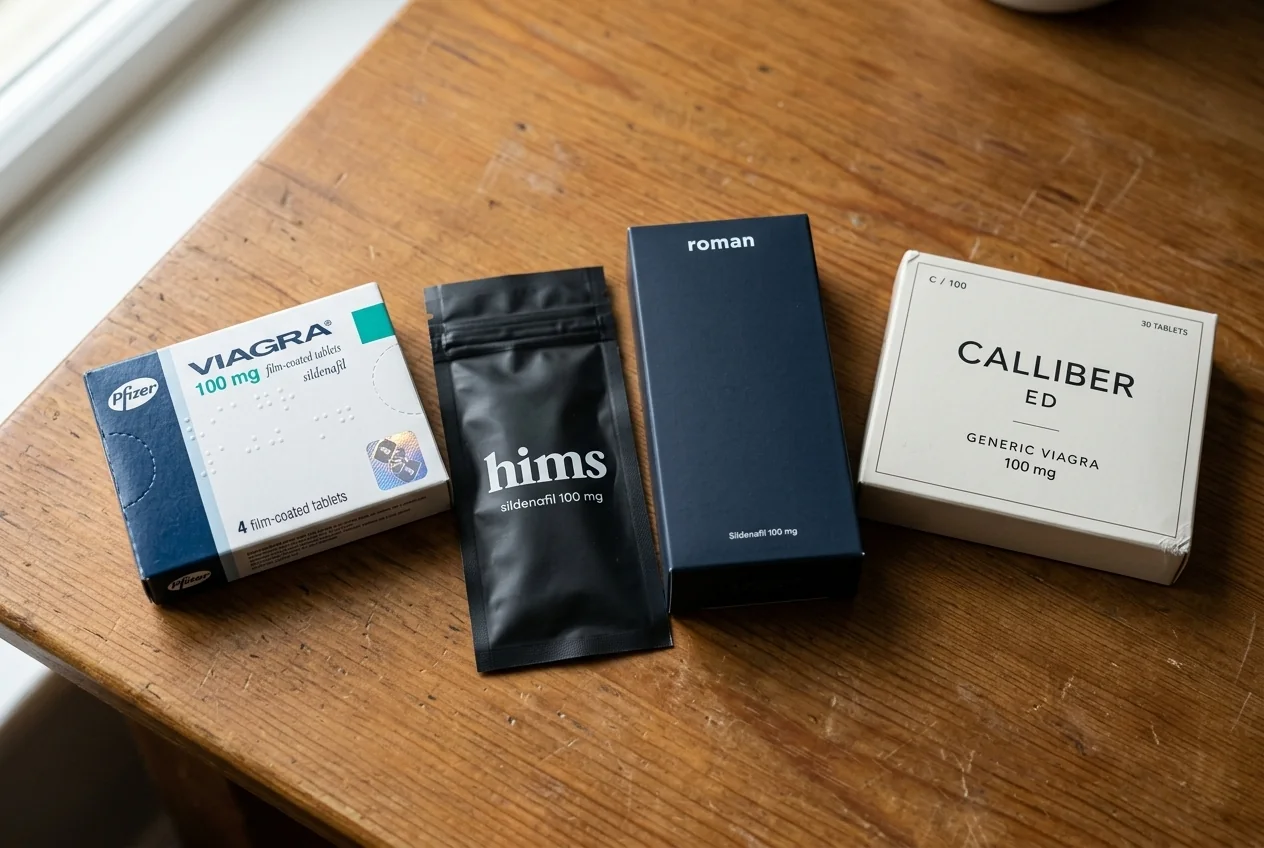
Let’s use Calliber.ED as an example.
When I first saw the price — $1.14 per pill — I assumed there had to be a catch.
But the explanation turned out to be much simpler.
Viagra is one of the most recognizable pharmaceutical brands in the world. And when a
man buys brand-name Viagra, he isn’t just paying for the sildenafil inside the pill.
The price also reflects the brand, marketing, distribution, wholesale markups,
pharmacy overhead, rent, staff, logistics, and the profit added at each step along the
way.
Calliber.ED works differently.
The product moves through a much shorter supply chain: without an expensive retail
pharmacy network, hundreds of physical locations, unnecessary middlemen, or the
massive marketing costs that come with a famous brand name.
If the product is sourced directly from the manufacturer or a major supplier, that can
reduce even more of the markups between the pill being made and reaching the customer.
Put simply:
When you buy Viagra, you’re not just paying for sildenafil — you’re also paying for
the Viagra name and everything built around it.
With Calliber.ED, many of those costs simply aren’t there.
That’s how one pill can cost $1.14 instead of $90 — not because sildenafil suddenly
became 80 times cheaper to manufacture, but because the sales model and the cost of
the brand are completely different.
And after seeing the results of our comparison, the question became even harder to
ignore:
If the effect is virtually the same, why pay dozens of dollars more just for the name
on the box?